
e-ALC, 05:01:50
Narrated by: Robyn Morales
Release Date: January 13, 2026
Published by: Books on Tape
Read from: January 15-16, 2026
Stand-alone
Source: PRH Audio App (I received this ALC free from the publisher and their app. This did nothing to influence my review!)
Content Warning: descriptions of violence due to war, death (not on page), displacement from home, mention of internment camps
For Readers Interested In: Middle Grade, Historical Fiction, Novel in Verse, Set Outside the USA, Racial/Ethnic Diversity (Asian/Hmong), Tear-jerkersA poignant middle grade novel in verse about a Hmong girl losing and finding home in the aftermath of the Vietnam War. For fans of Jasmine Warga and Veera Hiranandani.
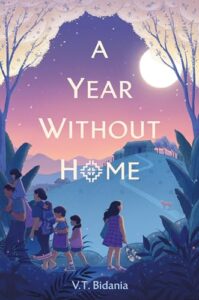
For eleven-year-old Gao Sheng, home is the lush, humid jungles and highlands of Laos. Home is where she can roll down the grassy hill with her younger siblings after her chores, walk to school, and pick ripe peaches from her family’s trees.
But home becomes impossible to hold onto when U.S. troops pull out of the Vietnam War. The communists will be searching for any American allies, like Gao Sheng’s father, a Hmong captain in the Royal Lao Army who fought alongside the Americans against the Vietnamese. If he’s caught, he’ll be killed.
As the adults frantically make plans – contacting family, preparing a route, and bundling up their silver and gold, Gao Sheng wonders if she will ever return to her beloved Laos and what’s to become of her family now. Gao Sheng only knows that a good daughter doesn’t ask questions or complain. A good daughter doesn’t let her family down. Even though sometimes, she wishes she could be just a kid rolling down a grassy hill again.
On foot, by taxi and finally in a canoe, Gao Sheng and her family make haste from the mountains to the capitol Vientiane and across the rushing Mekong River, to finally arrive at an overcrowded refugee camp in Thailand. As a year passes at the camp, Gao Sheng discovers how to rebuild home no matter where she is and finally find her voice.
Inspired by author V.T. Bidania’s family history, A Year Without a Home illuminates the long, difficult journey that many Hmong refugees faced after the Vietnam War.


*MY THOUGHTS*
This was a bad idea to read this right now with the world the way it is. Baby I cried from the beginning to end. I just kept seeing the babies in the US right now that are being ripped from their people and their homes. Though different I keep wondering what it would be like to have their experience written by them. My heart is breaking.
In this one tho, they’re being ripped away from their homes to be refugees, They had to evacuate their home in Laos after the US troops pulled out of the Vietnam war. This stood out to me so much because it’s told through the POV of a child. She talks about school and making friends and other things that kids find important. When she celebrated being able to have some sweets I cried. And being the oldest daughter (in the house at a time) I completely understood when she felt that being in charge of the other kids was her job. All of this made me think of everything that I’ve been seeing lately and it made me so sad. Just being able to compare the two really broke me.
Another thing that broke me about this book was the way the author said this was based on her own lived experiences. It’s told from her sister’s POV because it seemed she was too young to really remember. This is historical fiction, but it feels like I was reading something that happened yesterday. It was action packed and I found myself being scared every time something happened.
I know I say this every time I read a novel in verse, but I’m not usually a fan. I usually just read them if there’s something I’m really interested in. And this one was exactly that. However, I did feel like I missed some parts because it’s in verse. In novels in verse you can’t really give an in-depth details because of it’s format. In historical fiction you have to be careful what details you don’t add tho because your audience might not know anything about this specific event or person. And though it’s not specifics, there was still enough for me to have to look up some things.
This book was very good. I would recommend this to everyone, no matter their age. And I would also give this to those who need a good cry like I did.
Overall, I give this
